Logo
Renewable energy

Weather intelligence engineered for renewable markets

Forecast accuracy, verification transparency, and connected data intelligence for renewable energy operators in one integrated system.

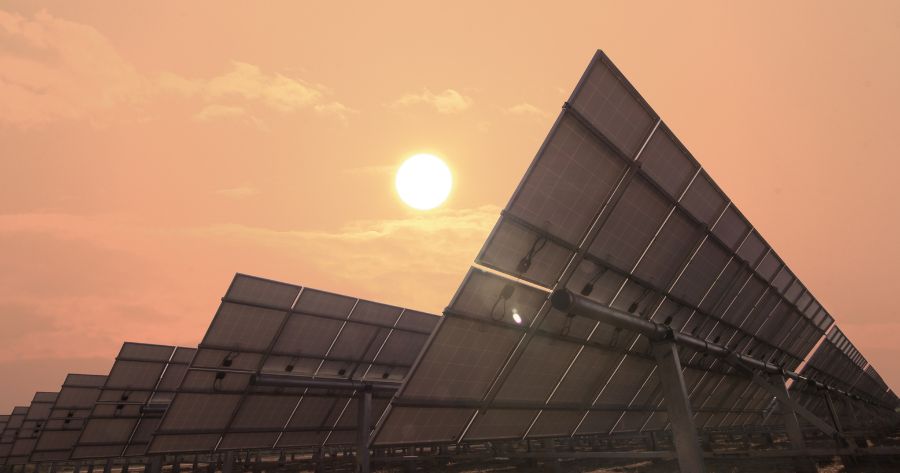
Rows of solar panels in a desert landscape, bordered by mountains under a cloudy sky.
A smooth, gradient background transitioning from light blue to soft gray
Weather & the renewables

Measurable performance across renewable portfolios

In renewable markets, small forecast improvements can create outsized financial gain. Forecast error is no longer a technical issue; it’s a financial exposure. It impacts imbalance costs, curtailment decisions, outage timing, asset valuation, and trading performance.

Xweather provides the forecasting accuracy and connected data infrastructure that renewable portfolios require.

From development through real-time operations, Xweather connects historical resource data, site-specific forecasts, and portfolio-level analytics into a single intelligence system. Continuous QA, verification transparency, and bias management are built into the process.

From resource assessment to real-time operations

01
Prospecting and development

Assess solar and wind resource quality using 20+ years of historical irradiance and wind data. Identify optimal sites, model expected yield, and build the bankable resource assessments that project finance requires.

02
Construction and commissioning

Validate system design assumptions against actual resource data. Use on-site sensor measurements and satellite-derived baselines to confirm that installed capacity aligns with development-stage projections.

03
Operations and management

Monitor real-time generation against expected performance. Xweather provides ongoing irradiance and wind data feeds for reconciliation, soiling detection, degradation tracking, and investor reporting.

04
Trading and risk management

Quantify weather-driven revenue risk across wind and solar portfolios. Use forecasts, production indices, and customizable hedging tools to manage PPA exposure, stabilize returns, and support trading decisions.

Find the optimal sites for solar energy projects

Access over 20 years of historical solar irradiance and weather time series data for resource assessments, yield forecasts, and risk analysis. Comprehensive data supports site selection, system design, and technology choices that maximize energy output and minimize risk.

Assess and optimize your wind energy projects

Use high-quality wind data for site selection, resource assessment, and climate impact studies. Quick and convenient visualization of wind data helps wind farm developers and operators make informed decisions to enhance project viability and success at every stage of wind energy development.

Historical wind resource data
A large crane installing a blade on a wind turbine in an open field under a cloudy sky.

Monitor real-time power generation

LOREM

Quantify weather-driven revenue risk across wind and solar portfolios

LOREM

Person working on solar panels on a rooftop at sunset, with a warm orange sky and the sun in the background.

40% of Fortune 100 rely on Xweather

A turning point for global energy demand

Pascal Storck
Sales Director, Renewable Enegy

A turning point for global energy demand

We are witnessing a peculiar time in the global energy business. For long, we have seen growth in energy demand in the developing world, but very little in the developed economies, as energy efficiency has offset any growth. Now increasing electricity demand is accelerating energy demand growth everywhere. As much of this energy demand should be met with sources that minimize pollution, including carbon. So all in on wind and solar renewables - but also all in on nuclear and natural gas. Politicians and the media pay way too much attention to stories about winners and losers in the future energy mix.

The issue has been studied for years (IEA, DOE, EPRI, etc.), and the conclusions outline a much more cooperative future. All clean energy sources are ramping up. To that end, I subscribe to the view very well described IEA reports that show a renewable future (new installs between 2025 and 2030) that is mostly solar (3.5k GW), split almost evenly between utility scale (2k GW) and distributed (1.5k GW), with wind playing a smaller (900 GW) but still important role.

While this growth is impressive, and there are new projects getting put in the ground, we have to accept that our entire energy mix won't be wind/sun (or carbon-free) anytime soon. Nuclear will take some time to reach scale (and be economically competitive), and transmission infrastructure to move energy at a continental scale is slow to build. Until then, we need fast-start, always-available generation units to provide electricity when and where it is needed, especially when the wind and sun are unavailable for extended periods. The above-mentioned IEA reports show that by 2030, about half of our electricity generation will come from sources that do not emit carbon to produce electricity (wind/solar/hydropower/nuclear).

Coal and gas are staying at almost constant levels from 2020 to 2030; nuclear sector isn't growing all that much either, given its economics. This means that the growth is met by a growth in photovoltaics and wind.

Given all that, it’s unsurprising that the question of weather and climate risk is more of an economic one. Photovoltaics is the dominant source of new energy, even though it surely has weather risk involved, since the sun doesn't shine for half the day! But a battery can fill that in during the nighttime. PV and battery is still cheaper than gas/oil/coal generation - that's why it wins. That's also why it is so sad to see renewables been characterized as energy failures by politicians that supposedly believe in free markets and competition. More on that later.

Partner

Renewable energy asset developer

Challenge

Bankable projects require defensible data. However, forecasting yield before construction is difficult because buyers need proof of performance and cost-effectiveness to secure financing.

Solution

Succeed with Xweather's solar and wind archive, solar and wind resource assessments, and on-site validation tools. Xweather provides historical resource datasets, long-range forecasting, and modelling rigor to support site selection, investment decisions, and financing conversations.

Impact
  • Secure project financing with bankable, defensible historical resource data.

  • Optimize hardware selection and system design through yield forecasting.

  • Reduce financial exposure by identifying weather-driven risks before construction begins.

Validation paper

Vaisala Xweather Solar Model 3

This validation paper documents the scientific methodology behind Solar Model 3 and evaluates its performance against high-quality ground-based measurements.

Results

Consistently low bias and strong agreement with observed Global Horizontal Irradiance (GHI) across regions, climates, and satellite domains.

New benchmark

38% greater GHI accuracy compared to ERA5.

Increased financeable capital

A 1% reduction in GHI uncertainty can increase allowable debt sizing by 0.5–1%, representing $500K–$1M in additional financeable capital on a $100M project.

Learn more

Historical wind resource data

Fast, easy access to high-quality historical wind resource data for site selection, resource assessment, and climate impact studies.

Wind resource time series data

Make informed decisions when assessing specific locations for wind energy projects, and understand a site's wind patterns and resource potential over time.

Time series data visualization

Quick and convenient visualization of time series data from an ensemble of ERA5, MERRA2, and HRRR reanalysis datasets covering more than 40 years.

Monthly and annual wind speeds

Monthly and annual wind speeds for any hub height between 50 and 200 meters. Data is available for any continental or near-shore location between 60° S and 70° N worldwide with 5 km resolution.

Offerings

Solar irradiance data

Over 25 years of bias-corrected solar resource records from satellite observations for any global location. Project developers and financiers use this data for site assessment, yield modeling, and investment decisions with reduced resource uncertainty.

Historical solar irradiance data

Over 25 years of bias-corrected solar resource records from satellite observations for any global location. Project developers and financiers use this data for site assessment, yield modeling, and investment decisions with reduced resource uncertainty.

WeatherDesk

A real-time weather intelligence platform delivering global forecasts, observations, and risk insights for energy, commodity, and agricultural markets. Helps trading teams anticipate market-moving weather events and respond ahead of the competition.

Xweather Powerup

Wind and solar forecasts, portfolio analytics, and hedging tools for renewable energy operators, traders, and investors. Built on Speedwell's weather-index expertise, it turns weather-driven volatility into predictable performance, helping teams manage risk and stabilize returns.

Xweather Protect

Real-time lightning, hail, and high-wind alerts for operations anywhere, with no on-site hardware required. Site-specific warnings arrive within seconds, with all-clear notifications that help teams resume work safely.

Historical wind resource data

Wind resource time series from an ensemble of ERA5, MERRA2, and HRRR reanalysis datasets covering 40+ years. Monthly and annual wind speeds for any hub height between 50 and 200 meters, available worldwide with 5 km resolution.

Learn more

High-resolution, real-time forecasts are critical to our business — and WeatherDesk delivers that reliably every day.

Lead Meteorologist, Renewable Energy Operations

Xweather provides one of the most comprehensive sets of forecast data and models we use to inform trading decisions.

Meteorologist, Commodities Trading

"We combine our blade monitoring with Xweather strike data because customers simply cannot afford to inspect every turbine after a reported strike."

Matt Stead
Co-founder and Chief Product Officer, Eologix-Ping

Related resources

Webinars and demos

We are ath a turning point for renewable energy. Is your portfolio ready?

Join the Xweather team to explore the critical factors shaping the market and future foresight.

Weather intelligence engineered for renewable performance

From resource assessment through real-time operations, Xweather delivers the forecasting accuracy, verification, and connected data infrastructure that renewable portfolios demand.

Frequently asked questions

Over 25 years of bias-corrected solar irradiance time series from satellite observations, including GHI, DNI, DHI, and albedo. Data is available for any global location at 3 km native resolution through Xweather Solar Model 3.