Logo

Natural language weather intelligence

The Xweather Phrases API turns complex weather data into natural language summaries for any audience, in over 50 languages.

Get started
Your on-demand meteorologist

Weather data translated into actionable language

The Phrases API bridges the gap between complex meteorological data and information that non-specialists can act on.

Three generative AI-powered endpoints produce concise, readable weather summaries covering current conditions, active alerts, and activity-specific impact assessments.

Phrases API

Weather summaries for every application

Automate purpose-built weather insights

From automated broadcast scripts to in-app driver warnings, the Phrases API delivers live weather data, producing current and relevant output rather than templated responses.

  • Dedicated endpoints: conditions, alerts, and impacts
  • Generative-AI powered
  • Endless use cases
A bubble with text: "Wind gust speeds are over 61 km/h.   It is recommended to secure any loose items and be mindful of potential hazards from falling branches or debris."

Personalize output to your needs

Multi-language functionality makes weather summaries accessible to global audiences without additional translation infrastructure. Choose style anywhere between formal broadcast language and conversational delivery.

  • Over 50 languages supported
  • Customizable tone and personality
A layer with text: "An Extreme Cold Warning is in effect, indicating a high risk of exposure to dangerously low temperatures"
Phrases API endpoints

/phrases/conditions

Aggregates and identifies key current and forecast weather metrics for any location, presenting them in the style of a traditional weather broadcast or report. Responses include temperature, wind speed, precipitation, humidity, and other relevant conditions.

Documentation

/phrases/alerts

Returns a concise summary of active government-issued weather alerts for a specified location. Includes alert type, severity, and duration, filtered and formatted for rapid comprehension.

Documentation

/phrases/forecasts

Natural-language weather summaries for a requested location, covering up to 15 days out. It aggregates key forecast metrics like temperature, wind, and precipitation and can be customized by time range, units, personality/tone, and output language.

Documentation

/phrases/impacts/:activity/

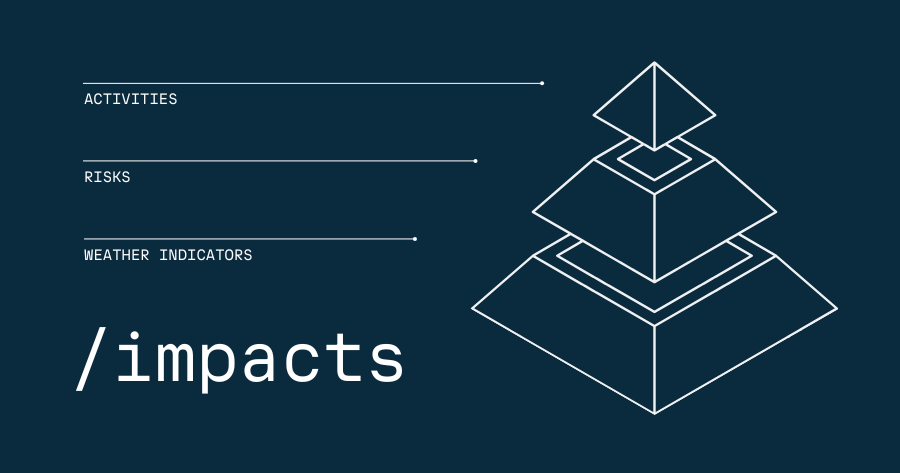
Generates detailed descriptions of immediate and short-term weather risks for a specific activity at a given location. Supported activities include general outdoor, roadway trucking, and maritime operations for both large and small vessels.

Documentation

Use cases across industries

Broadcast and online media

Automated, audience-ready weather updates for broadcasts, websites, and digital platforms.

Consumer weather platforms

Branded weather summaries in accessible language for applications, websites, and mobile experiences.

Emergency management

Clear, actionable alert summaries for public safety communications and emergency response.

Outdoor operations

Activity-specific weather insights for construction, events, recreation, and energy sector operations.

Transportation and logistics

Road impact summaries for drivers and fleet operators, formatted for in-vehicle or dispatch use.

Social media and content

Concise, engaging weather updates formatted for social channels and automated content pipelines.

Xweather Phrases API examples

  • RESTful service returning natural language weather summaries

  • JSON responses ready for integration into any application

Get started

Example request

Response

Your full weather stack

Phrases API

Turn complex weather data into natural language summaries, real-time insights tailored to your audience.

Set up your own meteorologist

The Phrases API is included in the Weather API and Maps subscription. Access all endpoints with a free 30-day developer trial.

Related resources

Frequently asked questions

The Phrases API converts complex weather data into natural language summaries that non-specialists can understand and act on. Three endpoints cover current conditions, active alerts, and activity-specific impact assessments. Responses are generated from live weather data using generative AI, in over 50 supported languages.